


There has been much written about how massive construction projects just aren’t made as efficiently as before. Environmental reviews and procedural obstacles (permitting!!!!!!!!) are often and rightly cited. Labor? That’s an issue too. But there’s another problem that is all too common, all too avoidable, but one which (unlike the others above) may be close to having a solution. It’s a field of construction that is moving and evolving quickly and one that could have real, positive impact.
Many of us city dwellers know the sight of tower cranes. Impressive both in their height and in their mastery of the principle of leverage. But how many of us wonder about why the cranes too often seem to be out of use or static? More often than not, the crane isn’t moving because of a labor strike, or a permit. It’s inoperative because some critical component stopped working and nobody saw it coming.
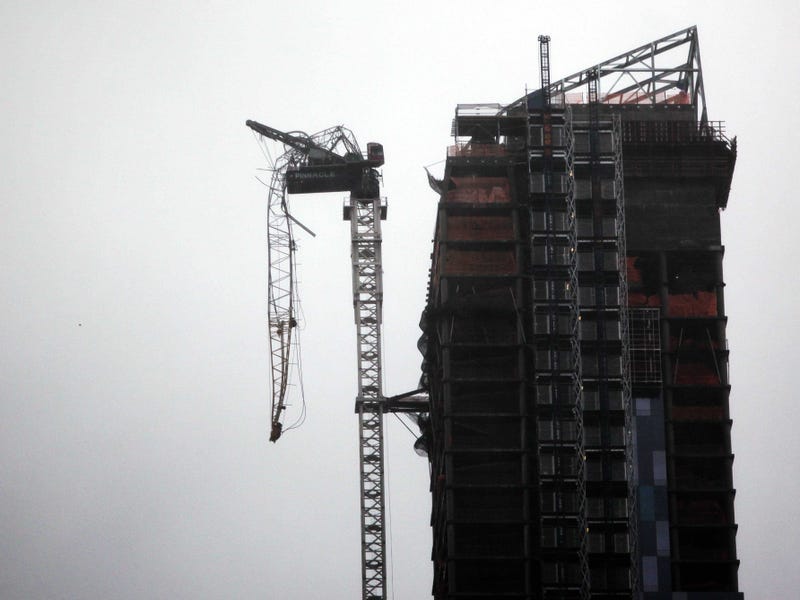
For decades, the construction industry has been reactive on the important subject of maintenance. It’s a run-to-failure, or hope-against-failure mindset that costs money, time, and impacts traffic and commercial business. In this industry, heavy, crucial machinery is pushed to its limits, and maintenance is only an afterthought post-catastrophic breakdown.
But there’s good news (of course!)
